
 Fashion & Wax
 Beauty & Hair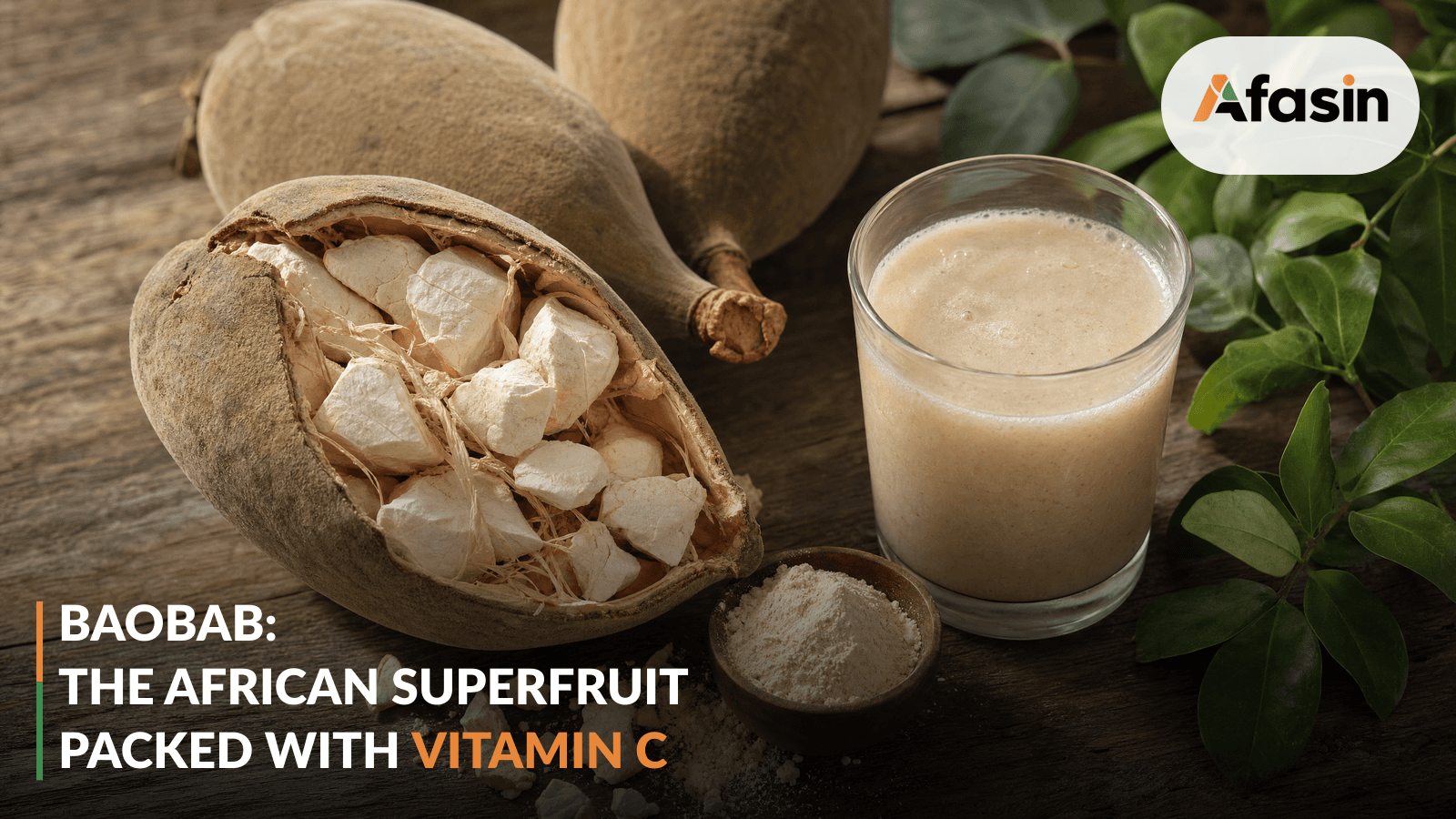
Baobab: The African Superfruit Packed with Vitamin C Worth (Re)discovering
Rich in vitamin C, fiber, and antioxidants, baobab pulp is one of Africa's great nutritional treasures. Discover this ancestral ingredient and how to bring it into your daily routine.
The baobab, an ancient tree nicknamed the 'tree of life', hides an exceptional pulp inside its fruit — richer in vitamin C than oranges, generous in fiber and antioxidants. An ancestral superfood that the Afro-Caribbean diaspora is rediscovering today.
What is baobab?
The baobab (Adansonia digitata) is an iconic tree of the African savanna, capable of living for centuries and storing huge water reserves in its massive trunk. It's nicknamed the 'tree of life' because it provides food, shade, materials, and traditional remedies to entire communities, from West to East Africa. Its fruit — a large pod hanging from the branches — holds a white, powdery pulp that is harvested, sifted, and turned into powder. In French, it's also known as bouye or pain de singe ('monkey bread').
An exceptional nutritional profile
What sets baobab pulp apart is its nutrient density. According to reporting from outlets such as Jeune Afrique and The Africa Report on the (re)discovery of African superfoods like moringa, fonio, and baobab, this fruit particularly stands out in several ways:
- A vitamin C content significantly higher than that of oranges (up to 7 to 10 times more, depending on the source)
- Abundant soluble fiber, valuable for digestive comfort
- High levels of antioxidants, up to 35 times more than grapes according to some estimates
- Calcium, magnesium, and phosphorus, essential minerals for the body's balance
- A naturally tangy taste, close to lemon or grapefruit, with no added sugar
Ancestral traditions and new habits
For generations, baobab pulp has been part of daily life for many African families: diluted in water with a bit of sugar, it becomes bouye, a refreshing drink very popular in Senegal and West Africa, while the leaves are cooked into sauces, as in the Malian lalo. Today, baobab powder fits just as easily into a modern diet: a teaspoon in a tropical fruit smoothie, mixed into plain yogurt, diluted in fruit juice to recreate the traditional bouye taste, or sprinkled over a fruit bowl. In France, baobab powder is increasingly easy to find at Afro-Caribbean grocery stores, organic shops, and superfood specialists: choose a 100% pure powder, with no added sugar or additives, ideally sourced through fair-trade channels that properly compensate African producers.
Rediscovering baobab means reconnecting with centuries of African food heritage while enjoying a naturally delicious, easy-to-cook ingredient. A simple way to bring your plate back to its roots, one spoonful of powder at a time.
Updated on 10 September 2026