
 Fashion & Wax
 Beauty & Hair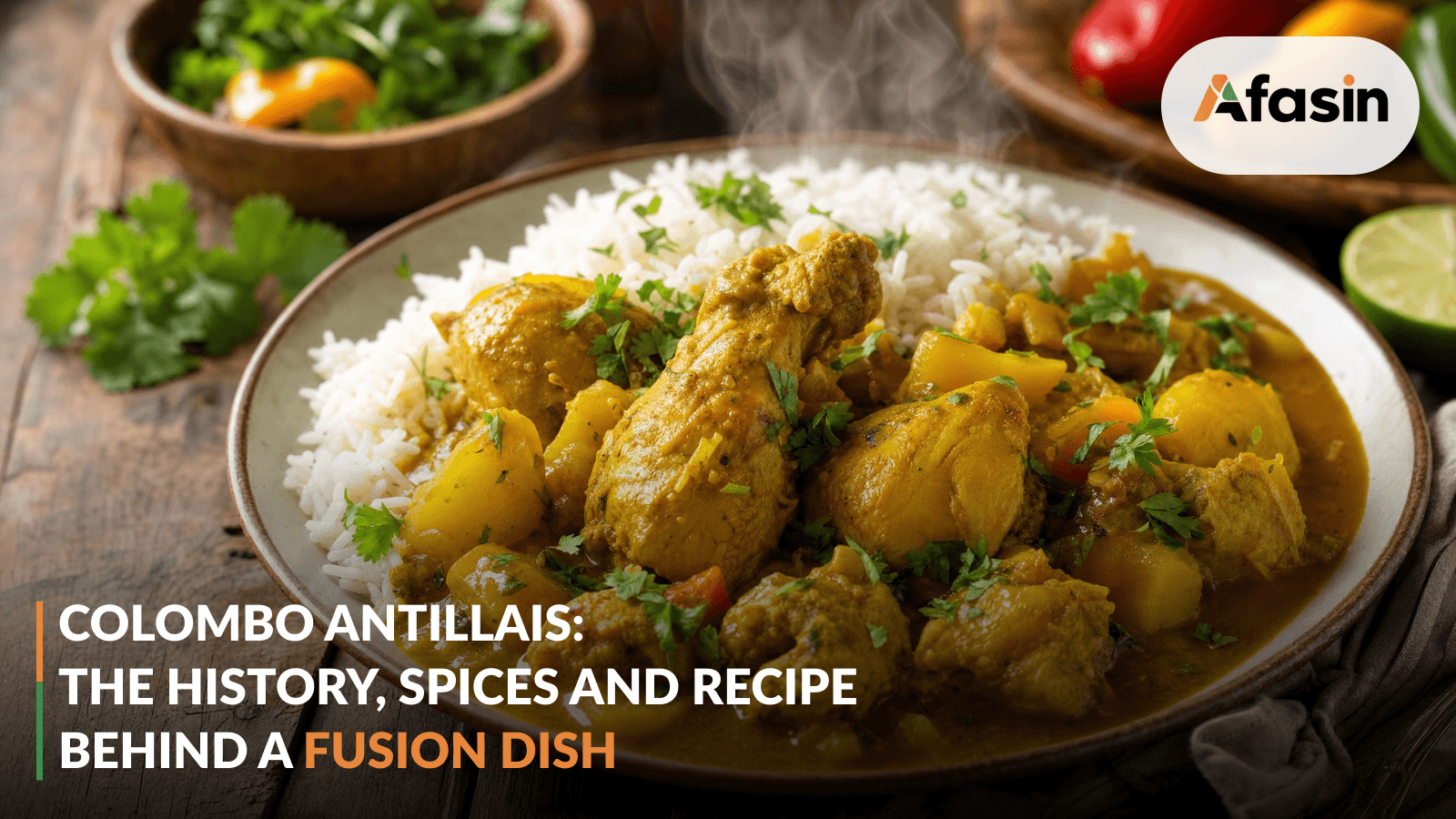
Colombo Antillais: The History, Spices and Recipe Behind a Fusion Dish
From southern India to the kitchens of Guadeloupe and Martinique, discover the history of colombo antillais, its signature spice blend and its classic versions: chicken, goat, pork.
Behind every steaming colombo lies a long journey: from the rice fields of southern India to the fragrant kitchens of Guadeloupe and Martinique, a story of resilience and cultural fusion more than a century and a half old.
A Dish Born of Exile and Resilience
In the 19th century, after the abolition of slavery, plantations across the French Antilles faced a severe shortage of labor. Thousands of workers from southern India, most of them Tamil, were recruited under indentured labor contracts to work the land in Guadeloupe and Martinique. Far from home, these men and women carried with them far more than their labor: their spices, their culinary traditions and the memory of the curries from their native region.
The very name "colombo" still intrigues today. Many historians and cooks trace it to the city of Colombo, in Sri Lanka, a transit or embarkation point for many of these indentured workers on their way to the Caribbean. Over generations, the original Indian recipe transformed through contact with local produce — yam, christophine, pumpkin — giving rise to a fully Caribbean dish, the fruit of a unique culinary fusion.
Colombo Spice Blend: A Caribbean Signature
Unlike store-bought Indian curry powder, colombo spice blend is a creation of its own, native to the French Antilles. The spices are often dry-roasted and then ground at home, giving it a deeper, rounder aroma and a distinctive golden color.
- Coriander: roasted then ground, it provides the aromatic base with a hint of citrus.
- Cumin: dry-toasted, it adds warmth and depth.
- Turmeric: gives the blend its characteristic golden color and a slightly earthy flavor.
- Mustard seed: adds a sharp, slightly bitter edge to the mix.
- Fenugreek: used sparingly, it recalls maple syrup and ties colombo back to its Indian origins.
- Chili, garlic and sometimes cloves: for heat and a rounded finish.
Chicken, Goat, Pork: Cooking a Dish That Brings People Together
- Colombo de poulet (chicken): the most common version, prized for its lightness and quick cooking time, made for weeknight dinners and big occasions alike.
- Colombo de cabri (goat): more assertive in flavor, the meat simmers for a long time until tender; often the colombo of family celebrations.
- Colombo de porc (pork): rich and generous, it pairs especially well with sweet potato and eggplant, which soak up the fragrant sauce.
Preparation always begins with a marinade: the meat is coated in colombo spice blend, garlic, thyme and sometimes a little lime juice, then left to rest so the flavors can penetrate. It is then seared and slowly simmered in its own juices, along with potatoes, eggplant or pumpkin depending on the household. A touch of tamarind is often added toward the end of cooking: its tartness balances the richness of the spices and gives colombo its distinctive sweet-and-sour signature.
Invariably served with white rice, colombo is meant to be shared with family, sometimes alongside red beans or plantains. A Sunday dish that has crossed generations without ever losing its soul.
Today, in Guadeloupe and Martinique as much as across the Caribbean diaspora in France and Europe, colombo continues to tell this story of encounter between two worlds. Far more than a simple curry, it stands as a symbol of Creole cuisine built on memory, adaptation and sharing — an invitation to rediscover, pot after pot, the richness of this culinary fusion.
Updated on 28 September 2026