
 Fashion & Wax
 Beauty & Hair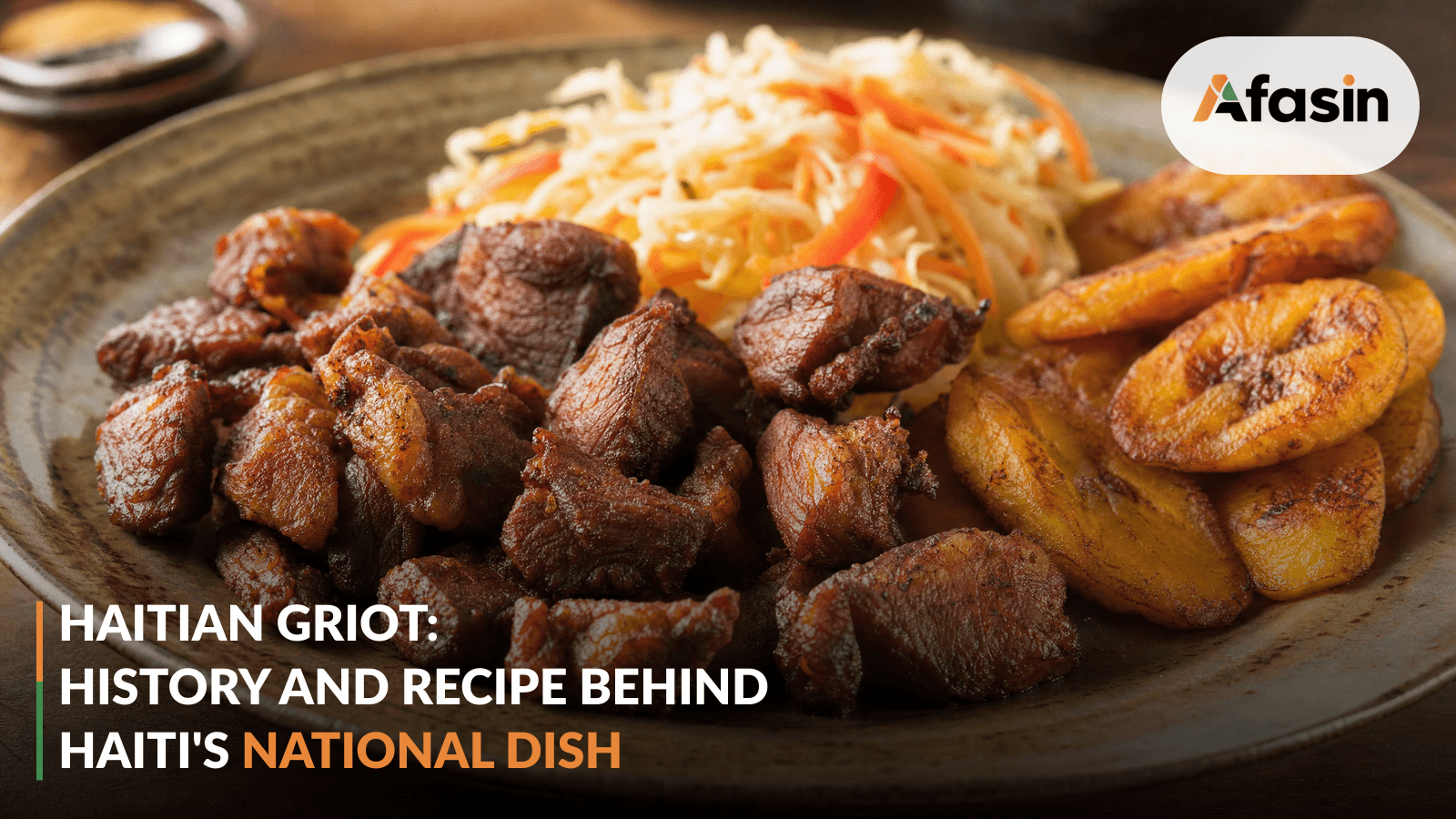
Haitian Griot: History and Recipe Behind Haiti's National Fried Pork Dish
Griot, Haiti's marinated and fried pork, embodies celebration and togetherness. Discover its history, a homemade recipe, and its essential sidekicks: pikliz and fried plantain.
Griot isn't just a dish, it's a ritual: marinated for hours, boiled with patience, then plunged into hot oil until every piece turns crackling and golden.
What Exactly Is Griot?
Griot (also spelled 'griyo' in Haitian Creole) is one of Haiti's signature dishes: cubes of pork marinated, then boiled, and finally fried until they form a crisp golden crust while staying tender and juicy inside. The marinade, called epis, is the aromatic backbone of Haitian cooking as a whole: a blended or pounded mix of onion, garlic, bell pepper, scotch bonnet pepper, lime (or bitter orange), parsley, thyme, and cloves. The pork soaks in it for several hours, sometimes overnight, to absorb these flavors before cooking begins.
The Traditional Sides: Pikliz and Fried Plantain
You can't talk about griot without mentioning its inseparable duo: pikliz and banane pesée (fried plantain). Pikliz is a mix of cabbage, carrots, onions, and scotch bonnet peppers pickled in vinegar and lime juice — a sharp, spicy condiment that cuts through the richness of the fried pork. Banane pesée is green plantain sliced, fried once, then flattened and fried again until golden and crisp outside, soft inside. Together, these three elements make up the classic griot plate, often served alongside rice and beans or plain white rice.
How to Make Griot, Step by Step
- Make the epis: blend onion, garlic, bell pepper, scotch bonnet pepper (seeded to taste for less heat), parsley, thyme, lime, and cloves into a fragrant paste.
- Marinate the pork: cut pork shoulder into cubes, coat generously with epis, add a bit of salt, and let it rest in the fridge for several hours, ideally overnight.
- Boil the meat: simmer the marinated pork cubes in a pot with a little water (sometimes with a bouillon cube or a piece of bitter orange) until tender, letting the water evaporate almost completely toward the end.
- Fry until crisp: drop the boiled pork pieces into hot oil and fry until golden and crackling outside while staying moist inside.
- Serve immediately with well-seasoned pikliz, fried plantain, and rice for the full authentic experience.
Griot: More Than a Dish, a Cultural Identity
In Haiti, griot reigns at every big occasion: family celebrations, weddings, lively Sunday gatherings, or simply sold streetside in Port-au-Prince by vendors frying it right there to the sound of kompa music. It's also a must at Haitian restaurants and in the 'lakou' (family courtyards) where people gather over a good meal. For the diaspora settled in France, Belgium, or elsewhere in Europe, making griot at home means finding grandma's kitchen smell again — a piece of Haiti on the plate, and a gesture passed down between generations.
Ready to try it yourself? Ready-made epis pastes, scotch bonnet peppers, and plantains are easy to find at Afro-Caribbean grocery stores and shops specializing in Caribbean and African products. It's well worth the detour to recreate, in just a few hours of preparation, all the warmth and generosity of the Haitian table.
Updated on 25 September 2026