 Fashion & Wax
 Beauty & Hair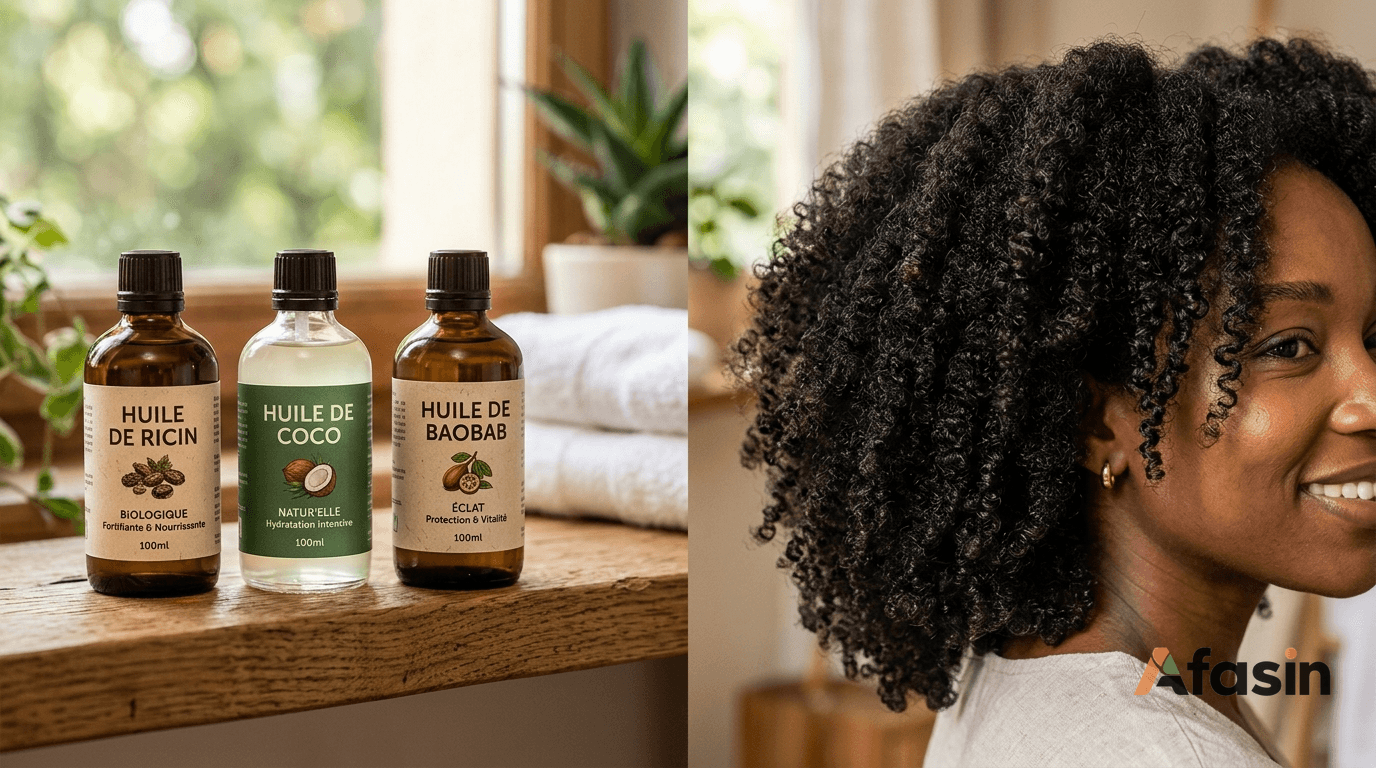
Natural Hair Oils for Afro Hair: Benefits
Discover why natural oils transform afro hair: 30% less breakage, lasting hydration and preserved cultural heritage.
Do you think oils weigh down your afro hair? This misconception stops many people from enjoying the extraordinary benefits of natural oils. In reality, the right oils nourish, protect and strengthen the hair fibre without weighing it down. Discover how to choose and apply these natural treasures to transform your hair routine and reveal the full beauty of your curls.
Table of contents
- Understanding the unique structure of afro hair and its needs
- Advantages and benefits of natural oils for afro hair
- Hydration, sealing and nutrition: how natural oils work
- Stimulating growth and scalp health through oils
- Focus on traditional Afro-Caribbean oils
- Common myths and factual corrections
- Best practices for applying natural oils
- Discover our solutions to enhance your afro hair
- FAQ on using natural hair oils
Key points to remember
| Point | Details |
|---|---|
| Unique hair structure | Type 4C afro hair is more fragile and needs targeted hydration to prevent breakage. |
| Breakage reduction | Regular use of natural oils can reduce breakage by up to 30% in three months. |
| Cultural value | Shea butter and baobab oil have been used for over 1000 years in Afro-Caribbean traditions. |
| Optimal application | Applying oils to damp hair 2 to 3 times a week maximises hydration without weighing hair down. |
| Choosing oils | Light oils like jojoba suit fine hair, while rich oils like shea butter are ideal for thick hair. |
Understanding the unique structure of afro hair and its needs
Afro hair's structure differs fundamentally from other hair types. Tight spiral curls slow down the diffusion of sebum produced by the scalp. This natural process explains why your hair stays dry even with a healthy scalp.
Type 4C hair is particularly fragile. Its zigzag shape creates tension points where the fibre can break easily. You notice this fragility during daily styling or after a restless night. This vulnerability calls for tailored care to maintain hair health.
Here's why afro hair needs special attention:
- The spiral shape prevents sebum from travelling naturally along the hair shaft, unlike straight hair where it slides freely from root to tip.
Advantages and benefits of natural oils for afro hair
Far from weighing hair down, well-chosen natural oils bring three major benefits: they nourish the fibre in depth, protect the cuticle from the mechanical stress of daily styling, and seal in the hydration provided by water or creams.
Used regularly, they reduce breakage, add shine and make detangling easier — a virtuous circle for longer, more resilient hair over the months.
Hydration, sealing and nutrition: how natural oils work
Not all oils act the same way. Some, like coconut oil, penetrate the hair fibre thanks to their low molecular weight and nourish from within. Others, like jojoba oil, stay on the surface and form a protective film that seals in hydration without penetrating.
Understanding this distinction lets you pick the right oil for the moment: penetrating to nourish before washing, sealing to lock in hydration at the end of your routine.
Stimulating growth and scalp health through oils
Massaging the scalp with castor oil or coconut oil stimulates blood microcirculation, bringing more oxygen and nutrients to the hair follicles. Practised regularly, this simple gesture promotes a healthy scalp, the essential foundation for optimal hair growth.
Focus on traditional Afro-Caribbean oils
Shea butter, extracted from the nuts of the shea tree of West Africa, remains the reference for the driest, thickest hair. Baobab oil, lighter, absorbs quickly and suits daily routines. Jamaican black castor oil, meanwhile, is traditionally used to stimulate growth and strengthen weakened areas like the temples.
Common myths and factual corrections
"Oils make hair grow faster." In reality, no oil directly speeds up the hair's biological growth. They do, however, create an optimal environment — healthy scalp, less breakage — that allows the length gained to be retained.
"The more oil, the better." Too much oil, especially applied to dry hair, can on the contrary suffocate the fibre and give it a dull look. Small amounts, applied to damp hair, are always more effective.
Best practices for applying natural oils
Always apply your oils to damp hair, never dry, to maximise their sealing effect rather than a mere surface shine. Focus application on the lengths and ends, the oldest and most fragile areas, avoiding weighing down the roots.
Two to three applications a week are enough for most textures; adjust according to how dry your hair feels and the climate.
Discover our solutions to enhance your afro hair
AFASIN offers a selection of natural oils and butters, from raw shea butter to Haitian black castor oil, to build a hair routine suited to the specific needs of your Afro-Caribbean hair.
FAQ on using natural hair oils
Can you mix several oils?
Yes, many routines combine a penetrating oil (coconut, olive) with a sealing oil (jojoba, castor) to combine their respective benefits.
Are oils suitable for fine hair?
Yes, as long as you favour light oils like jojoba or sweet almond oil, applied in very small amounts to avoid any weighing-down effect.
Updated on 17 March 2026