 Fashion & Wax
 Beauty & Hair
African Black Soap: Real Benefits, Myths to Know, and How to Use It Properly
Plantain skin ash, palm kernel oil, shea butter... What African black soap really does for skin, the myths worth correcting, and how to spot a genuine bar.
African black soap is gaining growing interest across Europe and the Afro-Caribbean diaspora. But there's a real gap between the traditional, genuine benefits and the miracle-cure claims circulating on social media. Here's what's actually worth knowing before adding it to your routine.
What is African black soap, and how is it traditionally made?
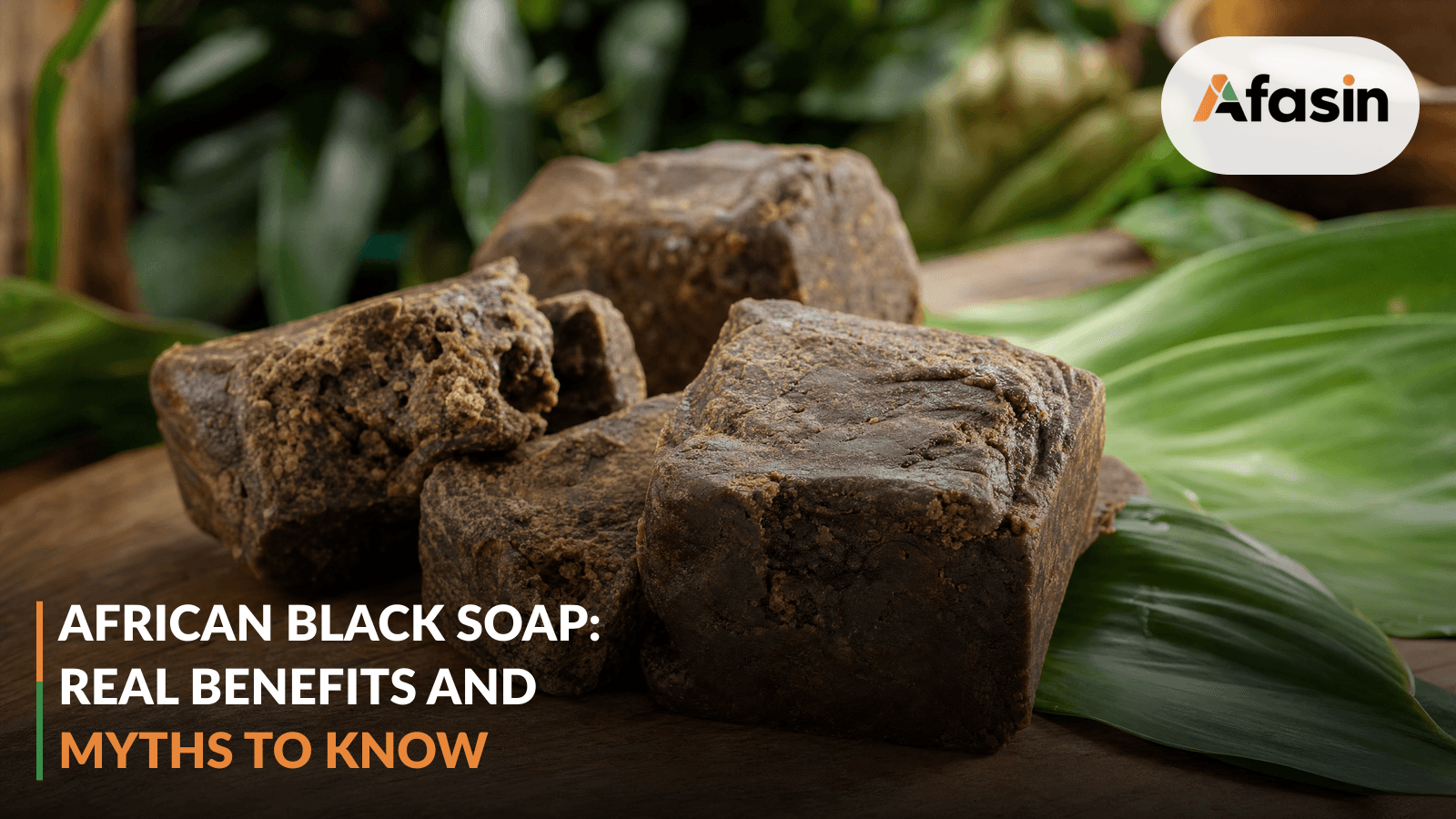
African black soap, sometimes called "Ghanaian black soap" or associated with Nigerian dudu osun, is a traditional West African soap that has been made for generations, notably in Ghana, Nigeria, Togo, and Côte d'Ivoire. Its production remains artisanal: plantain skins, palm leaves, or cocoa pods are first sun-dried, then burned to collect their ash. That ash is mixed with water to form an alkaline solution, which is then combined with oils and butters such as palm kernel oil, coconut oil, or shea butter. The mixture is heated and hand-stirred for hours, then left to harden and cure for several weeks. It's this artisanal cooking and curing process that gives black soap its uneven texture and its dark brown to black color — never perfectly uniform.
Real benefits traditionally reported
In West African traditions, black soap has long been used to cleanse the skin gently while respecting its natural balance. Its slightly grainy texture, coming from residual ash and plant fibers, provides a gentle mechanical exfoliation that helps clear pores without the harshness of a chemical scrub. The oils and butters it contains (shea, coconut, palm kernel) nourish the skin and help balance out the cleansing effect. That combination is why it has traditionally been favored for oily, combination, or blemish-prone skin: deep cleansing is paired with a dose of fatty nourishment that avoids the tight, stripped feeling some cleansers leave behind. These benefits, though, come from traditional use and generations of anecdotal experience, not established clinical evidence: black soap is not a dermatological treatment and shouldn't be presented as one.
Myths to correct and how to spot genuine black soap
- Myth: "it's a miracle cure for acne." Reality: no soap, however traditional, treats acne on its own; it can support a routine, never replace one.
- Myth: "the blacker and smoother it looks, the more authentic it is." Reality: it's the opposite. Genuine raw black soap is uneven, dull brown to black, sometimes crumbly — never perfectly smooth or a flawless deep black.
- Tip: be wary of soaps sold as perfectly molded, very dark, glossy bars — these are often industrially produced with dyes, synthetic fragrance, and fillers that dilute the benefits of the original product.
- Tip: quality black soap has a faint smoky or earthy smell, tied to the ash-burning process, not a strong floral or artificial fragrance.
- Tip: favor sellers who state the soap's origin (Ghana, Nigeria...) and list a short, recognizable set of ingredients, rather than marketing packaging with no real information.
How to use it properly, and who should be cautious
African black soap remains an alkaline soap: used too often or left on the skin too long, it can dry out and disrupt the skin barrier, even with its nourishing oils. Good practice is to patch-test on a small area (inner wrist or elbow) for 24 to 48 hours first, to avoid using it more than once or twice a day, and to always follow up with a moisturizer right after rinsing to help restore the skin barrier. People with very dry, reactive, eczema-prone, or atopic dermatitis-prone skin should be especially cautious: the exfoliating effect and alkaline pH can be too harsh for this skin type and may worsen tightness or irritation rather than relieve it.
African black soap has a real place in a skincare routine when it's genuine and used in moderation, but it doesn't replace a diagnosis or medical treatment. If you have persistent skin issues, severe acne, eczema, or any other skin condition, the best course of action is to consult a dermatologist rather than relying solely on advice found online.
Updated on 19 October 2026