 Fashion & Wax
 Beauty & Hair
Raw vs Refined Shea Butter: Which One Should You Choose for Skin and Hair?
Raw or refined shea butter: they're not the same. Discover the differences, how to spot genuine quality, and how to use it for skin and hair.
Raw or refined shea butter: two faces of the same treasure, but not quite the same benefits for your skin and hair.
Shea butter, a treasure from West Africa
Shea butter is extracted from the nuts of the shea tree (Vitellaria paradoxa), native to the savannas of West and Central Africa. It grows notably in Ghana, Burkina Faso, Mali, Ivory Coast, and Senegal, where its production has remained, for generations, in the hands of women organized into local cooperatives.
The traditional process is long and meticulous: the nuts are gathered, boiled, dried, then crushed before being ground and kneaded by hand for hours until a smooth paste forms. This know-how, passed down from mother to daughter, makes shea butter far more than a simple cosmetic ingredient — it is an economic and cultural pillar for many West African communities.
Raw vs refined shea butter: what's the difference?
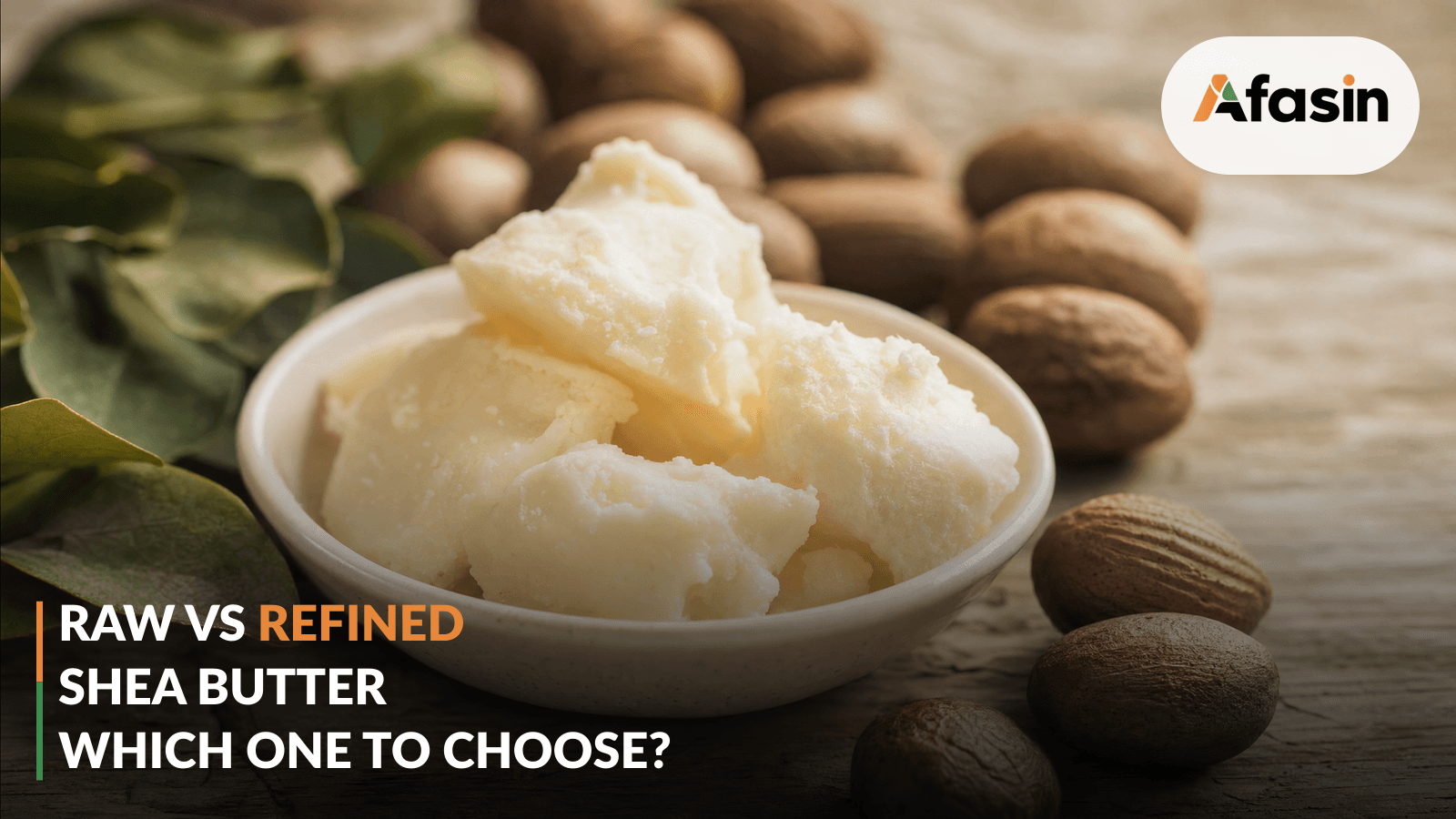
- Raw (unrefined) butter: ivory to pale yellow color, natural nutty and slightly smoky scent, sometimes slightly grainy texture that melts on contact with the skin, retains maximum vitamins A and E along with its essential fatty acids.
- Refined butter: white color, virtually odorless, smooth and even texture, but part of its nutrients are lost during the refining, bleaching, and deodorizing steps.
- Refining makes the butter more neutral in scent and easier to blend into store-bought creams, soaps, or balms, at the cost of some of its nutritional richness.
Why choose raw shea butter?
Raw butter is the best choice if you're looking for intense nourishment for very dry skin, damaged hair, or particularly stressed areas (elbows, heels, hair ends). Its richness in unsaponifiables and fatty acids (oleic, stearic, linoleic) makes it a valuable ally for restoring the skin's hydrolipidic film. It's also the butter most faithful to the traditional use African women have made of it for centuries.
Why choose refined shea butter?
If the smoky scent of raw butter bothers you, or if you're looking for a product that blends easily with other ingredients (oils, waxes, scented actives) to make your own cosmetics, refined butter is more suitable. It also works well for those sensitive to strong smells, while still retaining much of shea's moisturizing and protective properties.
How to spot genuine, quality shea butter
A few simple cues help judge the quality of shea butter, raw or refined. Start with the smell: an authentic raw butter gives off an earthy, slightly smoky scent — never rancid or chemical. Next, the texture: unaltered butter is firm at room temperature but melts instantly on contact with skin, without leaving a persistent greasy film or undissolved grains. Finally, the melting point: pure shea butter melts around body temperature, which is why it absorbs so easily once warmed between your hands before applying.
How to use shea butter every day
- As a moisturizer: applied pure or mixed with a vegetable oil, it deeply nourishes the face and body, especially on skin still damp after a shower.
- As a hair sealant: a thin layer over lengths and ends after styling locks in moisture and protects against outside aggressions.
- As a lip balm: its rich texture soothes and repairs chapped lips, alone or melted with a bit of wax.
- On stretch marks and scars: massaged in daily, it softens the skin and helps restore elasticity.
Raw or refined, shea butter remains a concentrated form of care shaped by ancestral know-how. The choice mainly comes down to your scent preferences and intended use: pick raw for maximum effectiveness and a direct link to tradition, or refined for more discretion and versatility. Either way, favor supply chains that respect the work of the women's cooperatives who have carried this knowledge forward for generations.
Updated on 22 October 2026